Estonia Refuses To Detain Russian Shadow Fleet Tankers In Baltic Sea Over Escalation Risk
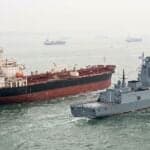


Estonia will not detain Russian oil tankers in the Baltic Sea, as authorities fear such action could lead to a military response from Moscow. The decision was shared by Estonia’s Navy Commander Ivo Vark, who said the risks are too high.
Several European countries, including Britain, France, Belgium and Sweden, have recently increased efforts to act against older tankers linked to Russia’s “shadow fleet.”
These vessels are being used to move oil despite Western sanctions, helping fund Russia’s ongoing war in Ukraine.
However, Estonia has chosen a more cautious approach due to its location near Russia’s key oil export routes in the Gulf of Finland. The country had earlier tried to board a Russian-linked vessel, but the attempt was not successful.
In May 2025, Estonia said Russia sent a fighter jet into NATO airspace during an attempt to stop an unflagged oil tanker believed to be violating sanctions. The jet later escorted the tanker into Russian waters.
Since then, Russia has increased its military presence in the region. Vark said Moscow now keeps two to three armed naval vessels on constant patrol in the Gulf of Finland.
More ships have also been deployed across the Baltic Sea, especially along routes used by tankers carrying Russian oil. He added that the Russian military presence in the Gulf has become much more noticeable.
Estonia has made it clear that it will only step in if there is an immediate threat, such as damage to underwater infrastructure or the risk of an oil spill. In other situations, it plans to avoid direct action.
Vark also pointed out that in areas like the Atlantic Ocean and the North Sea, where Russian presence is limited, countries have more freedom to act against such vessels without the same level of risk.
At the same time, tanker traffic near Estonia has increased. Around 30 to 40 tankers are currently waiting at the Vaindloo Anchorage in Estonia’s exclusive economic zone.
This number has tripled in recent days due to delays at Russian ports after Ukrainian drone attacks disrupted loading operations.
Reporters travelling on an Estonian navy vessel saw a Russian navy corvette operating near a group of tankers waiting to enter a nearby Russian port to load oil.
Russia has criticised Western sanctions, saying they are aimed at harming its economy. The Kremlin has also said its ships have the right to move freely in the Baltic Sea and warned that it is ready to respond if any attempts are made to stop them.
Reference: Reuters
Want to read more?
Check out the full article on the original site